How to run a good one-to-one.
The one-to-one is where a manager does most of the job that matters to the person. Done badly, it becomes a status update that both people dread and either will cancel given the chance.
On this page
Half an hour every week or fortnight, moved rather than cancelled, with their items first: listening, clearing obstacles, feedback both ways and their development, then short shared notes.
Free download: One-to-one agenda template ↓Getting the basics right
- How often, and how long. We suggest 30 minutes every week or fortnight as a starting point. See new starters, people taking on something new and anyone going through a difficult patch more often; experienced people in a steady role may prefer fortnightly. Whatever you agree, protect it. Move a one-to-one if you must; cancelling it, especially more than once, tells the person where they rank. If the meeting really has nothing in it, finish early.
- Whose meeting is it? Theirs. In our experience, the most useful change many managers can make is to put the team member’s items first. Your updates and requests can usually go in an email; their concerns usually cannot. Ask them to bring a few notes, and share a running document you both add to between meetings.
- Remote and hybrid. Use video if both of you are comfortable with it, close everything else on screen, and do not move remote one-to-ones more readily than in-person ones. Check in a little longer at the start; you will have missed the small signs you would pick up in an office.
A seven-part agenda
Check in
Start with the person, not the work. “How are you doing, on a scale of 1 to 10?” gets a more honest answer than “all good?”, and a change in the number from last time is worth asking about.
Their items first
“What’s on your mind?” or “What would be most useful to talk about today?” Then listen properly. Often the first item is not the real one; see active listening for managers.
Progress on priorities
A quick look at their three or so priorities: what has moved, what is at risk, what could be dropped. This is not a line-by-line status report; that belongs in a tracker.
Obstacles and support
“What is getting in your way?” and “What can I do to help?” Clearing obstacles is one of the most practical things a manager does, and in our experience people soon stop raising them if nothing happens. Note what you have promised.
Feedback, both ways
Say one specific thing that went well and, when there is one, one thing to do differently next time. Then ask: “What is one thing I could do differently that would help you?” Feedback given little and often avoids saving everything for an annual review.
Development
Ask about their current stretch, or what they have learned recently. Once every month or two, use the whole slot for a longer development conversation; see A development conversation that lands.
Actions
Finish by reading back the actions, who owns each one and by when. Start the next one-to-one by checking them, yours first.
Good questions to have ready, beyond those above:
- What has been the best part of the last fortnight?
- What has been the hardest part?
- What is at risk of slipping?
- What could you stop doing?
- Who else could help with that?
- What would you like more feedback on?
- What would you like to be able to do in six months?
- Is there anything you have been meaning to raise?
What to record
Keep notes short and factual: actions, owners, dates, decisions, and anything either of you has committed to. Share them, ideally in the same running document. Write them as if the person will read them, because they can usually ask to: under UK data protection law people can request the personal data an employer holds about them, and notes about their performance can be part of it.
Leave out opinions about their character, guesses about their health and anything you would not say to their face. If a one-to-one turns into a formal performance or conduct matter, follow your organisation’s procedure and take HR advice; ordinary one-to-one notes are not the place for it.
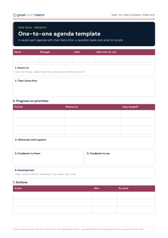
One-to-one agenda template
A one-page agenda with their items first, plus a page of questions and what to record.
Five mistakes
- The status update. If the meeting is a list of tasks, move the tasks to a tracker and give the time back to the person.
- The manager talks most. As a rule of thumb, the team member should do most of the talking.
- Nothing happens afterwards. Promises not kept teach people not to raise things.
- Saving it all for the review. Nothing in an annual review should be a surprise if the one-to-ones have done their job.
- Same meeting for everyone. Adjust the frequency and the balance to the person and what they are going through.
A one-to-one is also the natural place for the occasional stay conversation, asking what keeps someone here before they think about leaving; see Stay interviews.
Drawn from great{with}talent’s management toolkits and our work with managers. Notes and data protection: ICO, Subject access request Q and As for employers (checked October 2026). When an organisation wants to know how its people experience their managers, see WinningFormula and Five things managers do that move engagement.
The clearest thirty minutes in your week.
Send us your last engagement survey and we’ll show you what it’s missing – no charge, no deck, no obligation. Or start with a pilot or a 30-minute conversation.